

Where to Stay in Osaka: A Neighborhood-by-Neighborhood Guide
Last Updated: April 2026 Published: April 2026
The best area to stay in Osaka depends on what you came to do. Namba and Dotonbori put you steps from street food and nightlife. Shinsaibashi is the shopping corridor. Umeda suits business travelers. For first-timers who want to walk everywhere, the Namba-to-Shinsaibashi strip covers the most ground on foot.
This guide breaks down six neighborhoods by what you'll actually do there. It covers real nightly rates, transit times, and walking distances between areas. We live and work in these neighborhoods, so our tips come from daily life--not a weekend visit!
Key Takeaways
- Namba/Dotonbori is the best base for first-timers. Street food, nightlife, and a direct airport link via Nankai Line are all within walking distance.
- Shinsaibashi and Namba are roughly 600 meters apart, so staying in either gives you access to both. Shinsaibashi leans shopping. Namba leans food.
- Tennoji/Shinsekai has the lowest nightly rates in central Osaka (capsule hotels from around 2,000 yen) and a local feel with fewer foreign tourists.
- Umeda is where you stay for department stores and business. It feels like a different city from Minami.
- Skip Shin-Osaka unless you have an early shinkansen departure or a late arrival. The neighborhood has transit and not much else.
- Book direct with smaller hotels when you can. OTA markups up to 20% are standard, and smaller operators pass those savings to direct bookers.
Namba and Dotonbori: Street Food Capital
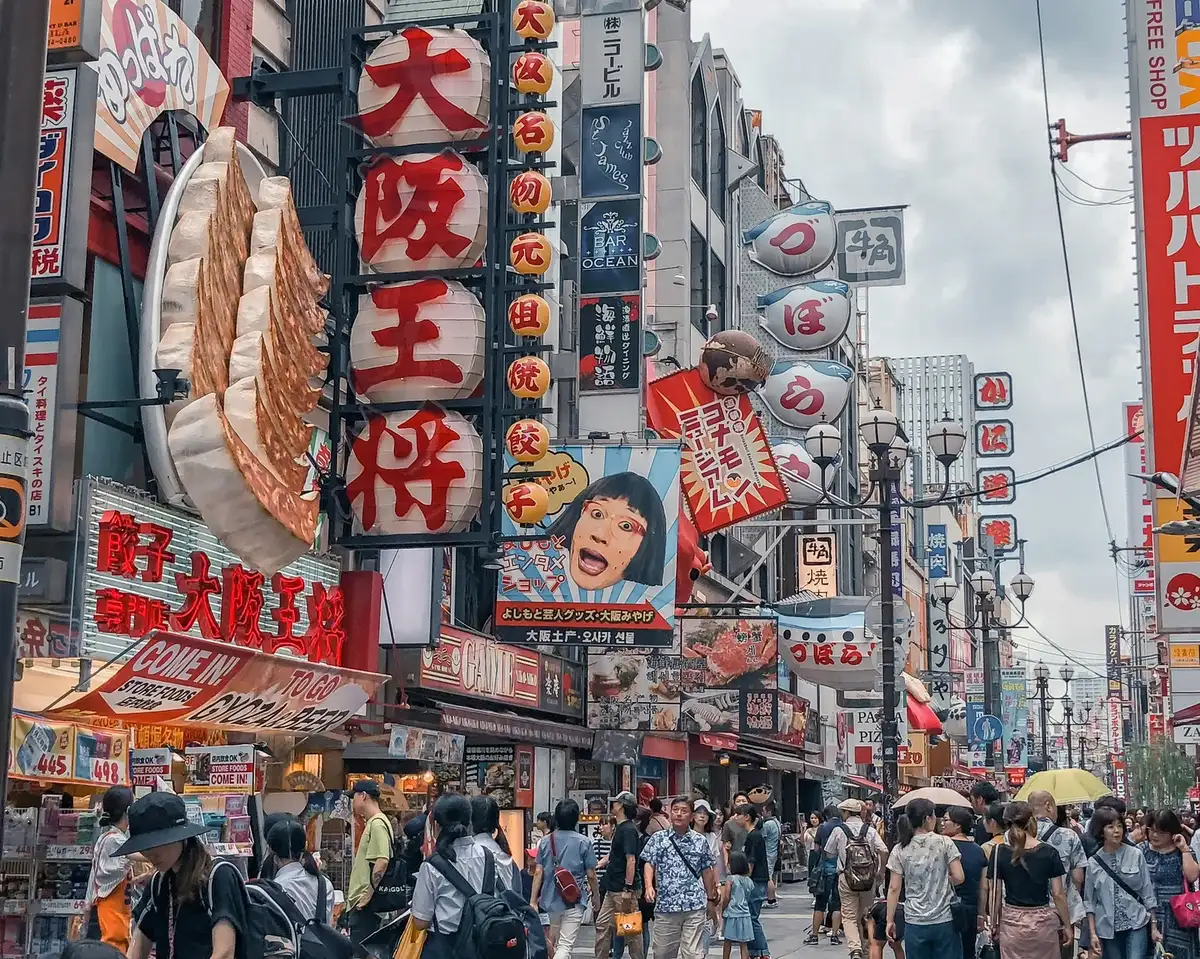
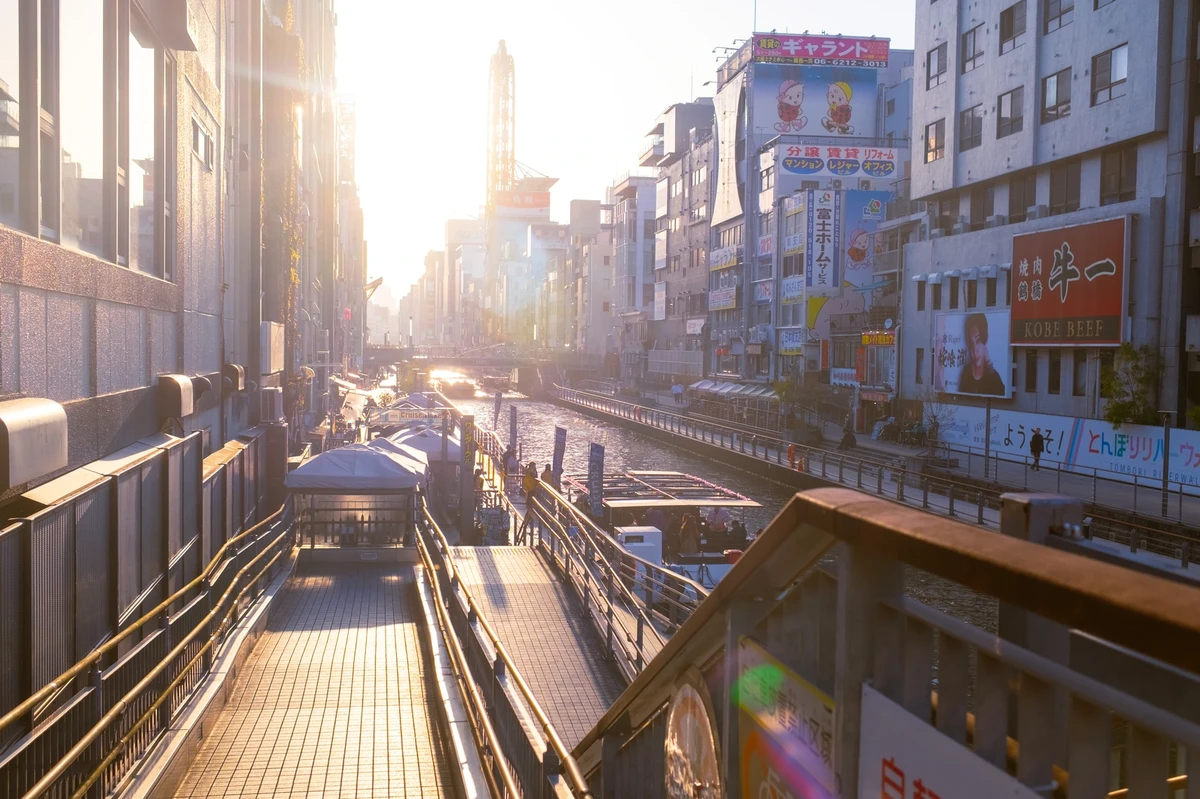
Namba is the heart of Minami, Osaka's southern downtown. If you only have two nights in the city, this is where you stay. The Dotonbori canal runs east-west through the district. Its 600-meter-long strip draws an estimated 15 million visitors per year based on Japan National Tourism Organization data.
What You'll Eat and See
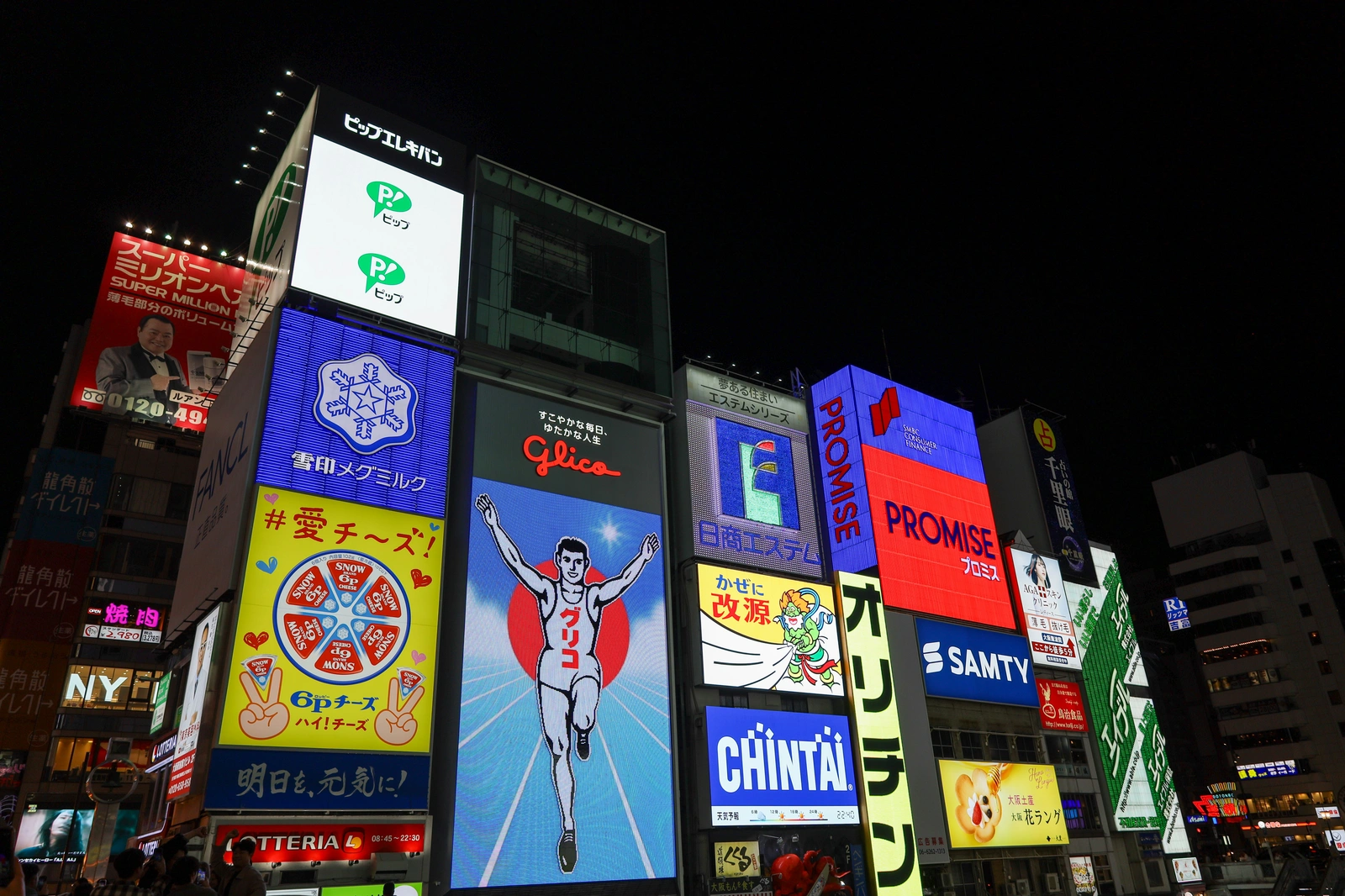
Dotonbori hits you with neon signs, giant mechanical crabs, and the smell of batter on hot oil. The famous Glico Running Man sign has stood at Ebisu Bridge since 1935 (the current LED version went up in 2014). From that bridge, you can walk to more than 90 restaurants and food stalls within 5 minutes.
The street food here is not for show. Takoyaki (battered octopus balls) runs 500-700 yen for 8 pieces at most stands. Okonomiyaki (savory pancakes with cabbage, pork, and sweet sauce) costs 800-1,200 yen per serving. Kushikatsu (deep-fried skewers) starts at about 100-150 yen per stick at standing bars in the area.
Kuromon Market is a 580-meter covered market about 10 minutes on foot southeast of Dotonbori. It has been open since 1902. You'll find fresh seafood, produce, and prepared food from roughly 150 stalls and shops. Arrive before 10 a.m. for the best picks. Many vendors close by early afternoon.
Local tip: Dotonbori is best experienced twice -- once during the chaos of the evening, and once early morning when it's almost empty. We'll often grab coffee nearby and walk the canal before the crowds roll in. If you want a slightly calmer food crawl, wander a few streets south of the canal -- you'll still eat just as well, but without the shoulder-to-shoulder traffic.
Who Should Stay Here
- First-timers who want to experience Osaka's personality immediately
- Food-focused travelers who plan to eat their way through the city
- Nightlife seekers: bars and izakaya along Dotonbori stay open past midnight
Transit Connections
Namba Station is one of Osaka's busiest hubs. Five rail lines meet here: the Midosuji Line, Sennichimae Line, Yotsubashi Line (all Osaka Metro), Nankai Main Line, and Kintetsu Namba Line. The Nankai Line runs direct to Kansai Airport in about 45 minutes on the Limited Express Rapid (1,450 yen). The Airport Express takes 48 minutes and costs 930 yen.
From Namba Station, you can reach Shinsaibashi in 1 stop on the Midosuji Line (2 minutes), Tennoji in 5 stops (10 minutes), and Umeda in 8 stops (15 minutes).
Budget Range
Capsule hotels and hostels start around ¥4,000–5,400 ($26–35). Mid-range hotels (private rooms with bath) run ¥5,300–10,100 ($34–65). Business hotels from chains like APA and Sotetsu Fresa sit in the ¥8,400–15,800 ($54–102) range.
If you're staying in Namba and want a base within walking distance of Dotonbori, Wayfarer Matsu is roughly a 10-minute walk south, with direct booking rates starting around $49 per night.
Shinsaibashi: The Shopping Corridor
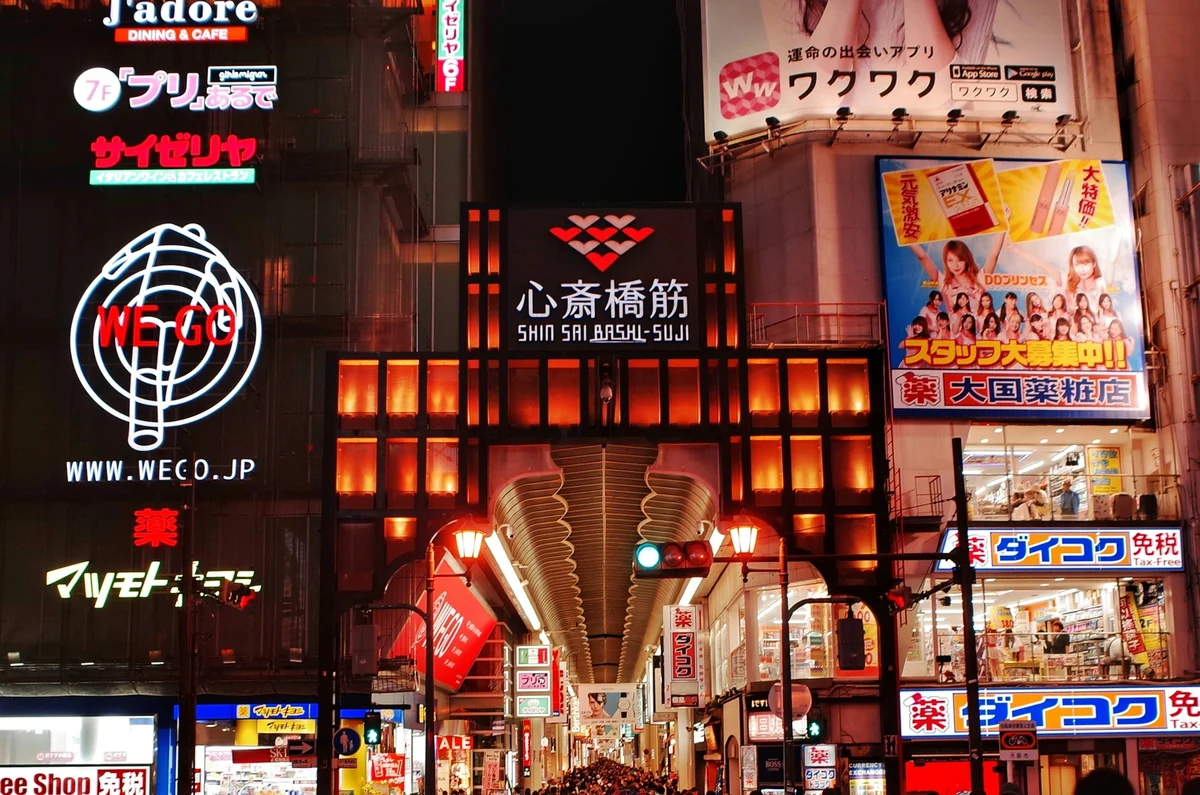
Shinsaibashi sits just north of Namba, and the two neighborhoods blur together at their edges. The main draw is Shinsaibashi-suji, a 600-meter covered shopping arcade that runs north-south between Shinsaibashi Station and the Dotonbori canal. The arcade has been a shopping street since the Edo period (1600s). It is one of Osaka's oldest retail areas.
What You'll Buy and Do
The arcade holds roughly 360 shops. You'll find fast fashion (Uniqlo, GU, H&M), Japanese beauty brands (Shiseido, DHC, drug stores full of sunscreen and sheet masks), and souvenir shops. On the east side, parallel streets hold luxury stores: Louis Vuitton, Gucci, Dior, and Apple's Osaka store all sit within a few blocks.
West of the arcade, Amerika-mura (American Village) fills about four square blocks. This is Osaka's youth fashion and streetwear hub, packed with vintage clothing shops, sneaker sellers, and small boutiques. Triangle Park, a small concrete plaza in the middle of Amerika-mura, is where local skaters and musicians hang out on weekends.
Local tip: Amerika-mura hits differently at night -- that's when the skaters, street musicians, and vintage crowd really come out. Triangle Park turns into more of a social hub than a sightseeing stop. For something more low-key, duck into the side streets for small cafes and vintage shops -- the arcade is just the starting point.
For more detail on what to do in this area, our Shinsaibashi area guide covers restaurants, cafes, and lesser-known side streets.
Who Should Stay Here
- Shoppers who want the arcade and brand stores on their doorstep
- Couples looking for a walkable neighborhood with restaurants and bars
- Style-conscious travelers drawn to Amerika-mura's vintage and streetwear scene
Transit Connections
Shinsaibashi Station sits on the Midosuji Line, Osaka Metro's main north-south line. One stop south to Namba (2 minutes). One stop north to Honmachi (2 minutes). Six stops north to Umeda (12 minutes). The Nagahori Tsurumi-ryokuchi Line also stops here, running east-west.
Walking is the primary mode in this neighborhood. Namba is 600 meters south (roughly 8 minutes on foot). Nipponbashi is about 1 kilometer east (12 minutes walking).
Budget Range
Shinsaibashi's central spot pushes prices a bit above Namba. Capsule hotels and hostels start around ¥5,000–5,700 ($32–37). Mid-range hotels run ¥6,100–10,200 ($39–66) — this is the densest area for 3-star options. Business chains and newer lifestyle brands push up to ¥14,700 ($95). The area has fewer cheap hostels than Namba but more boutique hotels.
Wayfarer Shinsaibashi sits steps from the arcade, with direct booking rates from about $49 per night. It is a good base if you want shopping and food within a few minutes' walk.
Tennoji and Shinsekai: Local Flavor on a Budget
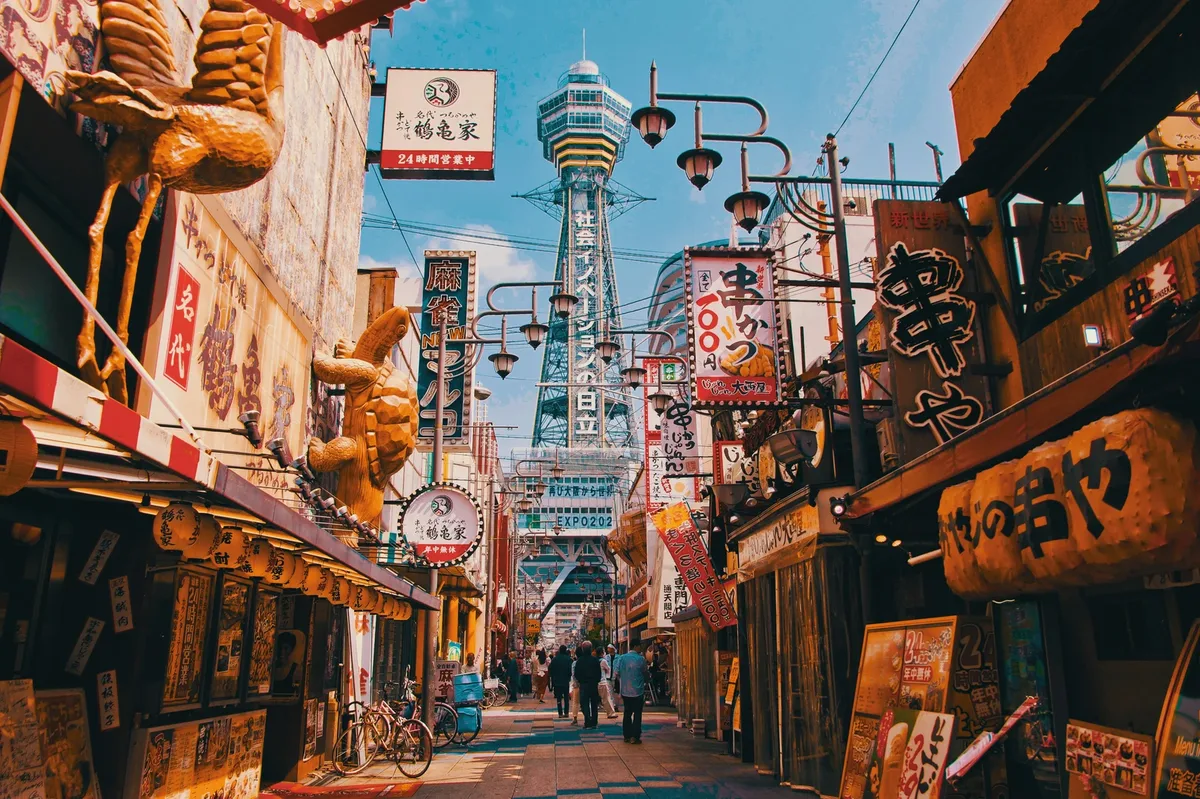
Tennoji sits at the southern edge of central Osaka, about 3.5 kilometers south of Namba. It has far fewer tourists than Minami, which is part of its charm. This is where Osaka locals actually live and shop, and hotel prices reflect the lighter crowds.
What You'll See and Eat
Shinsekai ("New World") is the postcard image of retro Osaka. The area was built in 1912 as a flashy district modeled partly on New York's Coney Island and partly on Paris. Tsutenkaku Tower, first built that same year and rebuilt in 1956, stands 108 meters tall at the district's center. The deck costs 900 yen and gives 360-degree views of the city.
The star dish is kushikatsu -- deep-fried skewered meat, vegetables, and seafood. Shinsekai's main strip, Janjan Yokocho, lines both sides of a narrow alley with kushikatsu spots. Prices are among the lowest in central Osaka. A full meal of 10-15 skewers with beer runs about 1,500-2,500 yen ($10-17). The rule at every kushikatsu place: no double-dipping in the shared sauce.
Local tip: Shinsekai feels a bit frozen in time -- in the best way. It's a little gritty, a little nostalgic, and very Osaka. Go in the late afternoon when locals start filtering in, rather than peak dinner hours when it fills up with visitors.
Abeno Harukas, linked to Tennoji Station, is Japan's tallest tower at 300 meters (it held the record from 2014 until 2023). The top-floor deck, Harukas 300, costs 1,500 yen and offers views as far as Kobe and Awaji Island on clear days. The building also holds Kintetsu Department Store, which fills floors B2 through 14.
Tennoji Park and Tennoji Zoo sit directly behind the station. The zoo dates to 1915 and charges just 500 yen for adult admission.
Who Should Stay Here
- Budget travelers looking for the cheapest central rooms
- Repeat visitors who have already done Namba and want a different feel
- Families: Tennoji Zoo, Tennoji Park, and Abeno Harukas give kids plenty to do. Our guide to traveling with family in Osaka covers this area in more detail.
Transit Connections
Tennoji Station is another major hub. JR lines (Osaka Loop Line, Yamatoji Line, Hanwa Line), Osaka Metro (Midosuji Line, Tanimachi Line), and the Kintetsu Minami-Osaka Line all stop here. The Midosuji Line reaches Namba in about 10 minutes and Umeda in about 20 minutes. The JR Haruka express gets you to Kansai Airport in 35 minutes (1,210 yen for open seats).
Budget Range
This is the cheapest area in central Osaka for hotels, so budget-conscious travelers should start here. Hostels start around ¥5,300–6,300 ($34–41). Mid-range hotels run ¥5,200–9,200 ($34–59) — the cheapest area overall for private rooms. Business chains like APA sit around ¥8,200 ($53). The trade-off is a 10-15 minute train ride to Namba and the main fun areas.
Umeda and Kita: Business District and Department Stores
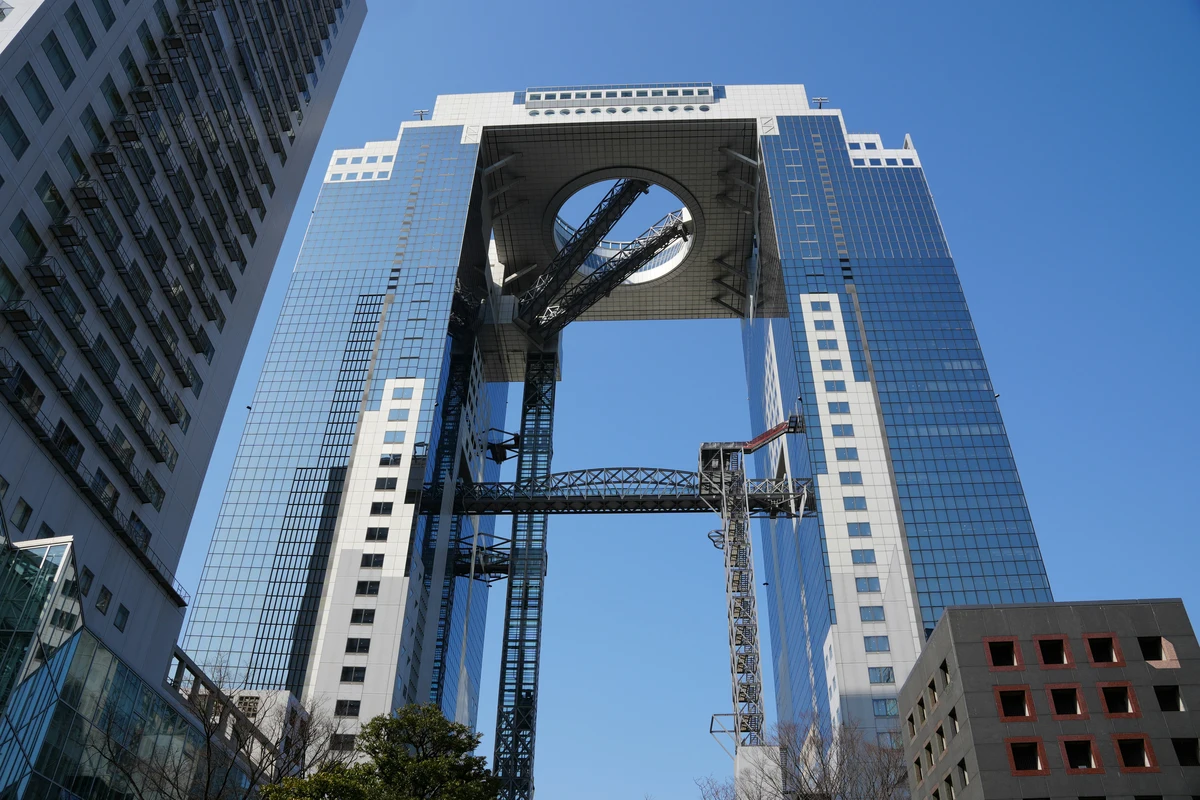
Umeda is Osaka's northern business center, about 4 kilometers and a 15-minute train ride from Namba/Shinsaibashi. If Minami is Osaka's personality, Kita is its business card. The vibe is more formal -- suits outnumber tourists, and the dining leans toward upscale izakaya and hotel restaurants.
What You'll See and Do
The Umeda Sky Building, finished in 1993, connects two 40-story towers with a "Floating Garden Observatory" on the 39th floor (1,500 yen). The rooftop gives open-air 360-degree views. It is one of the few decks in Osaka where you can feel the wind.
Underground, a massive shopping network connects the Umeda area. Whity Umeda stretches about 800 meters and holds over 200 shops and restaurants. Above ground, Grand Front Osaka (opened 2013) adds 266 more shops across two towers. HEP Five, a mall on the east side of Umeda, has a rooftop Ferris wheel (600 yen) you can spot from blocks away.
Department store shoppers will find Hankyu, Hanshin, Daimaru, and Lucua all clustered within a 5-minute walk of each other around the station complex.
For something different, Nakazakicho is a 10-minute walk east of Umeda Station. This quiet residential area has turned into a pocket of indie cafes, galleries, and vintage shops inside renovated pre-war wooden houses.
Local tip: Nakazakicho is where we go when we want a break from Umeda's scale -- quiet alleys, independent cafes, and converted old houses that feel nothing like the business district a few minutes away.
Who Should Stay Here
- Business travelers attending meetings or conferences in Kita
- Department store shoppers who want Hankyu, Hanshin, and Grand Front on their doorstep
- Travelers who prefer a quieter, more polished neighborhood
Transit Connections
The Umeda station complex is the largest in Osaka -- and the most confusing. Three stations serve the area: JR Osaka Station, Hankyu Umeda Station, and Hanshin Umeda Station. Osaka Metro also stops here on the Midosuji, Tanimachi, Yotsubashi, and Four Bridges lines. They all link up underground, but walking between platforms can take 10-15 minutes.
From Umeda, the Midosuji Line reaches Shinsaibashi in 6 stops (12 minutes) and Namba in 8 stops (15 minutes). The JR Osaka Loop Line circles the city and connects to Tennoji (about 20 minutes) and Shin-Osaka (1 stop, 4 minutes). Hankyu lines run to Kyoto Kawaramachi (about 45 minutes, 400 yen) and Kobe Sannomiya (about 30 minutes, 320 yen).
Budget Range
Budget hotels and hostels start around ¥4,200–5,300 ($27–34). Mid-range and business hotels cluster tightly at ¥7,000–10,200 ($45–66). This is almost entirely business hotel territory — not many backpacker options up here. Budget travelers will find better value in Namba or Tennoji.
Shin-Osaka: Transit Stop, Not a Destination
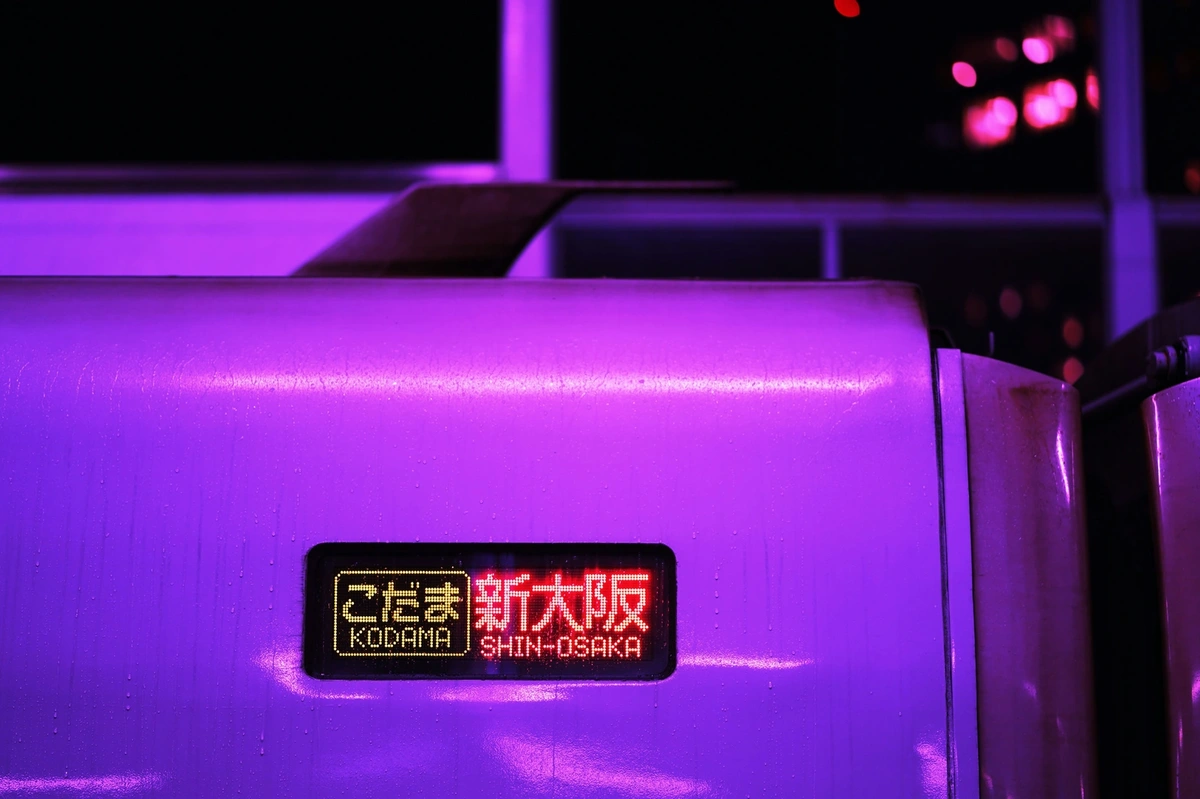
Shin-Osaka Station exists for one reason: it is Osaka's shinkansen (bullet train) stop. The Tokaido-Sanyo Shinkansen stops here on every service, connecting to Tokyo (2 hours 30 minutes on Nozomi, about 14,520 yen), Kyoto (15 minutes, 1,450 yen), Hiroshima (1 hour 30 minutes), and Hakata/Fukuoka (2 hours 30 minutes).
Why You Might Stay Here
If your shinkansen leaves before 7 a.m. or arrives after 11 p.m., a hotel near Shin-Osaka saves you a long ride. The Midosuji Line links Shin-Osaka to Umeda in about 6 minutes and to Namba in about 20 minutes, but the last trains run around midnight. Miss the last metro and you face a 4,000+ yen taxi to Minami.
What's Around
Not much. The station building has restaurants and a small shopping area. The surrounding neighborhood is residential and office buildings. There are no major sights within walking distance. If you have a few hours to kill between trains, take the Midosuji Line two stops south to Umeda for food and shopping.
Local tip: If you do end up staying here, plan at least one evening in Umeda -- it's close enough to make the trip worth it.
Budget Range
Hotels cluster immediately around the station and cater to travelers passing through. Capsule and budget hotels start around ¥3,100–5,900 ($20–38). Business hotels cluster at ¥6,000–8,300 ($39–54), with a few pushing to ¥11,000 ($71). Pure transit hub pricing — functional, not flashy.
Nipponbashi and Den Den Town: Anime, Electronics, and Otaku Culture
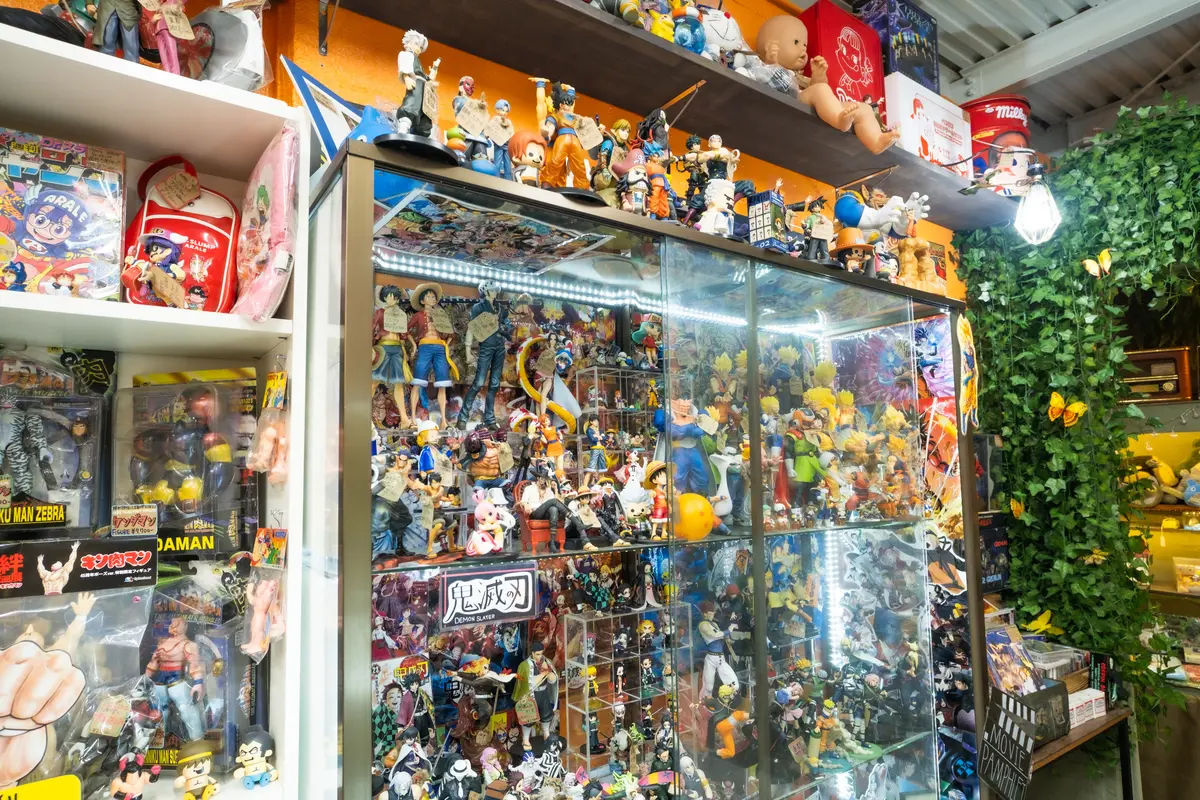
Nipponbashi stretches south of Namba. Its core is a 500-meter strip of electronics shops, anime stores, and hobby sellers known as Den Den Town -- think of it as Osaka's answer to Tokyo's Akihabara, but smaller and less hectic. The district sits about 1 kilometer east of Namba Station (about 12 minutes on foot).
What You'll Browse and Buy
Den Den Town's core runs along Sakai-suji (Sakai Street) between Nipponbashi Station and Ebisucho Station. Shops sell retro video games (Super Famicom cartridges, arcade boards), Gundam model kits, figurines, manga, and cosplay gear. Several multi-floor stores stock both new and used goods at prices consistently lower than Akihabara.
Maid cafes and themed restaurants line the side streets. On weekends, cosplayers gather along the main strip, and some shops run limited-time collaborations with anime series.
Local tip: Some of our favorite finds here are the small, independent shops where the owners will happily walk you through their favorite pieces -- it's less transactional, more treasure hunt. Look past the big chain stores and you'll stumble into tiny, family-run places packed with retro finds and collectibles you won't see anywhere else.
At the southern end of the district, Kuromon Market (also accessible from the Namba side) gives a food-market counterpoint to the electronics. The market is walking distance from either neighborhood.
For more on the area, check our Nipponbashi area guide.
Who Should Stay Here
- Anime and manga fans who want to browse without commuting
- Electronics shoppers hunting retro games, components, or hobby supplies
- Budget travelers who want Namba proximity at slightly lower prices
Transit Connections
Nipponbashi Station serves the Sakaisuji Line and Sennichimae Line (Osaka Metro). Ebisucho Station (Sakaisuji Line) sits at the south end of Den Den Town. From Nipponbashi, you can reach Namba on foot (12 minutes) or via the Sennichimae Line (1 stop, 2 minutes). Tennoji is about 8 minutes on the Sakaisuji Line.
Budget Range
Guesthouses and hostels start around ¥6,600–7,900 ($43–51) — fewer capsule/hostel options here than neighboring areas. Mid-range hotels run ¥5,200–9,200 ($34–59). Pricing overlaps heavily with Tennoji to the south. The area is Osaka's otaku/electronics district (think Akihabara vibes), so the hotel stock leans toward compact budget hotels and apartment-style stays rather than big chain properties. Lots of vacation rentals near Kuromon Market.
Ori Nipponbashi is within walking distance of Den Den Town and Namba, with direct booking rates starting from about $35 per night.
Neighborhood Comparison
Namba/Dotonbori -- Best for first-timers and food lovers. $17-80/night. You're already in Namba. 1 min walk to food, 8 min to Shinsaibashi shopping.
Shinsaibashi -- Best for shoppers and couples. $20-100/night. 1 stop to Namba (2 min). 5 min walk to Dotonbori, 0 min to shopping (you're on the arcade).
Tennoji/Shinsekai -- Best for budget travelers and families. $13-53/night. 5 stops to Namba (10 min). 3 min walk to Shinsekai food, 15 min to Namba-area shopping.
Umeda/Kita -- Best for business and department store shoppers. $23-100+/night. 8 stops to Namba (15 min). 3 min walk to underground food, 0 min to shopping (Grand Front, Hankyu).
Shin-Osaka -- Transit stop only. $40-67/night. 3 stops to Namba (20 min). Limited food and shopping within walking distance.
Nipponbashi -- Best for anime and gaming fans. $17-60/night. Walk or 1 stop to Namba. 5 min walk to Kuromon Market, 2 min to Den Den Town.
How to Choose Your Neighborhood
Your trip type narrows the options quickly:
First time in Osaka: Stay in Namba or Dotonbori. You can walk to more things here than from any other base, and the neighborhood gives you the best feel for what Osaka is like. The Nankai Line also gives you a direct airport link with no transfers.
Shopping trip: Shinsaibashi puts the 600-meter covered arcade at your front door, with Amerika-mura and luxury flagships within a few blocks. You can walk to Namba for food in under 10 minutes.
Traveling with a family: Tennoji gives you space and lower prices. Tennoji Zoo (500 yen), Abeno Harukas, and Tennoji Park keep kids busy, and the JR Haruka express runs direct to Kansai Airport. Namba also works if ease matters more than budget.
Business travel: Umeda is the default. Offices, department stores, and upscale dining are all here, and JR Osaka Station connects to the airport, Kyoto, and Kobe with no Metro transfer.
On a tight budget: Tennoji or Nipponbashi. Both offer central Osaka rooms at 20-40% less than Namba or Shinsaibashi. Tennoji has the lowest rates, and Nipponbashi adds easy walking access to Namba.
Anime and pop culture: Nipponbashi is non-negotiable. Den Den Town puts 500 meters of shops at your doorstep, and Namba's food and nightlife are a 12-minute walk away.
If you're still unsure, our default recommendation: stay somewhere walkable in Minami (Namba or Shinsaibashi) for your first trip, then explore outward from there.
For a broader overview of what to see once you've settled in, our guide to top Osaka attractions covers the highlights across all neighborhoods.
Booking Tips for Osaka Hotels
Osaka hotel prices fluctuate by season. Peak periods are cherry blossom season (late March through mid-April), Golden Week (late April to early May), and autumn foliage (mid-November). During these windows, prices across all areas jump 30-50% above normal, and popular hotels book out weeks ahead.
Booking direct with smaller hotels typically saves 2-20% compared to OTA platforms like Booking.com, Expedia, or Agoda.
Most budget and mid-range hotels in Osaka have a 3 p.m. check-in and 10 a.m. checkout. You can store bags at the front desk or in coin lockers at Namba, Umeda, and Tennoji stations (400-700 yen per locker per day based on size).
We run hotels in Shinsaibashi, Namba, and Nipponbashi, so we know these neighborhoods from the inside. Book direct at kabinhotel.xyz for the best rate, up to 20% cheaper than OTAs.
All pricing info in this article is from Booking.com at the time the article was published. Prices are subject to change based on availability and seasonality.
